public dialogues – Third Culture or New Scots ? at the Refugee Festival Scotland
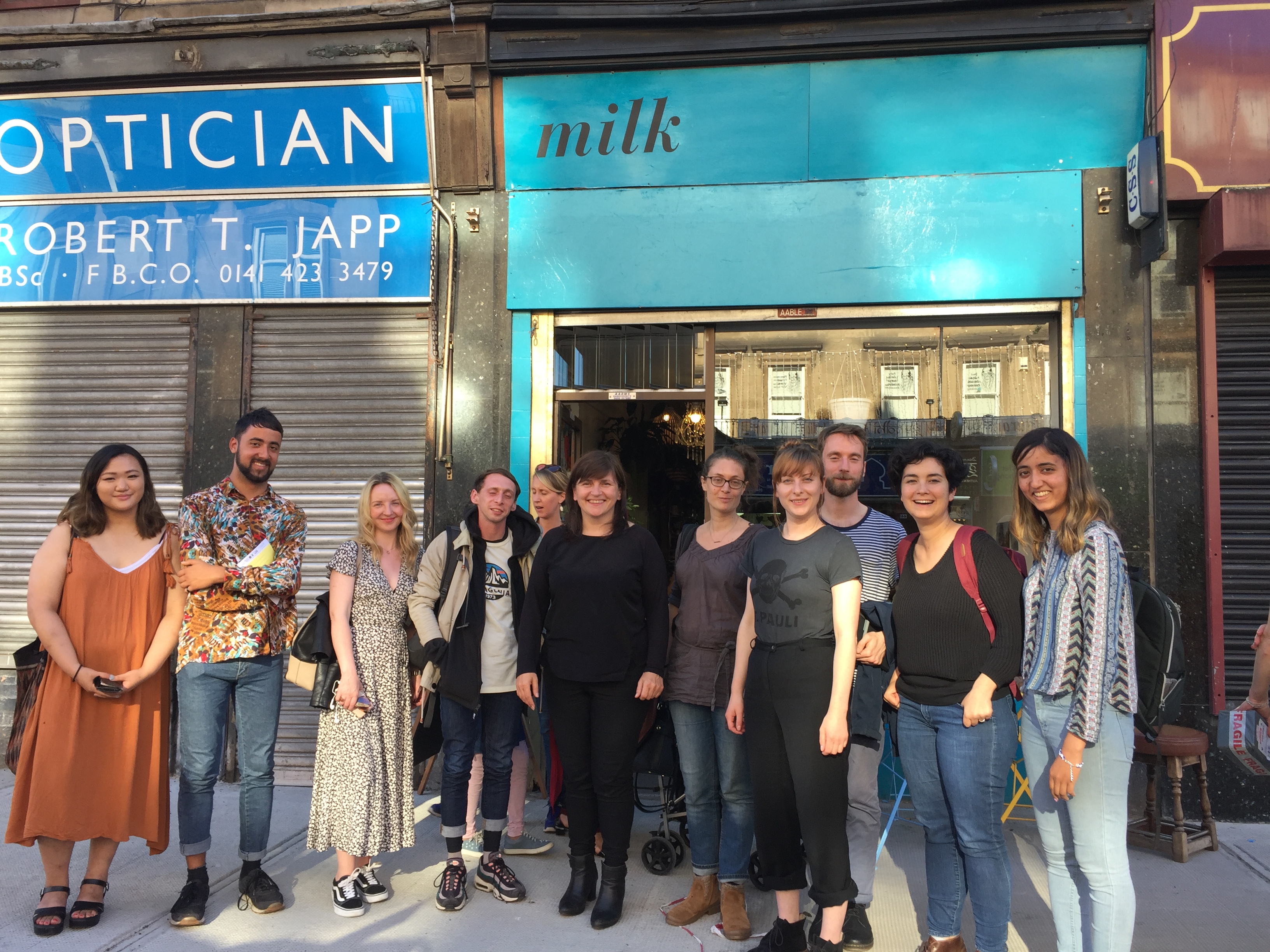
Third Culture or New Scots? 26.06.2019 at the Refugee Festival Scotland 2019 and Milk Café © Cultural Documents
Come and join this lively discussion exploring the terms New Scots and Third Culture Kids: we’d like to hear your views on these terms, and also what you would like your unique identities and stories to be called.
The event will be introduced with a brief description of each term, and continue with discussions and workshop activities, with tea and soft drinks available.
Please see more info here.
Devised and produced by Cultural Documents in partnership with Milk Café and the Refugee Festival Scotland 2019, IFS Worldwide and with funding from the Culture and Business Fund Scotland
FREE but please book your place at this link.
Wednesday 26 June from 17:30 – 19:30
at Milk Café, 452 Victoria Road, Glasgow, G42 8YU
image: Third Culture online archive © Cultural Documents
___
Third Culture Kid
Some definitions selected from various internet sources:
The concept of the ‘Third Culture Kid’ defines a hybrid sense of identity created when a person grows up in a culture which differs from that of their parents’; being a legitimate member of the two or more cultures enables them to claim a new status or identity which is commonly referred to as a ‘Third Culture’. This term avoids these sensitivities by encouraging thinking about identity as an outcome of the continuum of societal evolution and the future, rather than the past and perpetuation of historical regimes defined by nation-states.
The term Third Culture Kid describes people who grow up in a culture different to that which their parents experienced; these people feel that their identities are formed of both their heritage and adopted societies, so Third Culture refers to the new manifestation of the blend of the heritage with the new culture and indicates towards the sense of uniqueness which many people identify with in response to their own, unique lived experiences.
Third Culture Kids are considered to have developed a high level of bi-culturally competence, so we hope to meet and engage with many of them as they participate in the Refugee Festival.
You Might Be a Third Culture Kid if …
• You can’t answer the question “Where are you from?”.
• You speak two languages but can’t spell either.
• You have a passport, but no driver’s license.
• You don’t know where home is.
• You have friends in or from many different countries.
• You wince when people mispronounce foreign words.
• You never take anything for granted.
• You feel you need to move after you’ve lived in the same place for a month.
___
Text from the Scottish Government New Scots policy :
“Scots have really opened their hearts to refugees. That warm welcome is greatly appreciated and, with global displacement at record levels, it’s more important than ever.
This second New Scots refugee integration strategy is an extremely valuable initiative, all the more so that refugees and asylum seekers are active in shaping its concept and delivery.
We very much endorse Scotland’s vision of refugee integration as a two-way process, bringing positive change in refugees and host communities, and helping to build a more compassionate and diverse society.” Gonzalo Vargas Llosa, United Nations High Commissioner for Refugees Representative to the UK
Angela Constance MSP, Cabinet Secretary for Communities, Social Security and Equalities
We often take for granted the many good things about living in Scotland. We know we have further progress to make, but thankfully we do not face the widespread persecution, often state sanctioned, which exists in some parts of the world.
Some people are forced to escape war and other forms of indiscriminate violence. Others are persecuted because of things we take for granted, such as: having a political opinion; attending a place of worship; or belonging to a social group. People can also be at risk because of their identity: as a woman; part of the LGBTI community; or because of their ethnicity. For all refugees, leaving home is not a choice but a necessity.
I am proud that Scotland has become home to people from all over the world seeking safety. Scottish Ministers have always been clear that people who seek asylum in Scotland should be welcomed and supported to integrate into our communities from day one. When refugees and asylum seekers arrive, they need understanding, support and hope for their future; and children should be able to be children, whether they arrive with their family or on their own.
This is Scotland’s second New Scots refugee integration strategy. New Scots recognises that refugees and asylum seekers face challenges which can limit their inclusion in our society, but it also recognises that refugees bring strength, knowledge and skills. They are assets to our communities and, as they rebuild their lives here, they help to make Scotland stronger, more compassionate and more successful as a nation.
Vision
To achieve this vision, we will work to ensure that Scotland:
• Is a place of safety for everyone, where people are able to live free from persecution as valued members of communities.
• Enables everyone to pursue their ambitions through education, employment, culture and leisure activities.
• Has strong, inclusive and resilient communities, where everyone is able to access the support and services they need and is able to exercise their rights.
• Is a country that values diversity, where people are able to use and share their culture, skills and experiences, as they build strong relationships and connections.
Purpose
The purpose of the New Scots strategy is to coordinate the efforts of organisations and community groups across Scotland involved in supporting refugees and asylum seekers.
It provides a clear framework for all those working towards refugee integration and assists the work of all partners to make the best use of resources and expertise that are available across Scotland, by promoting partnership approaches, joined-up working and early intervention. This supports the vision of a welcoming Scotland, where people seeking protection from persecution and human rights abuses are able to settle and rebuild their lives in our communities.
For a welcoming Scotland where refugees and asylum seekers are able to rebuild their lives from the day they arrive.
The New Scots strategy sees integration as a long-term, two-way process, involving positive change in both individuals and host communities, which leads to cohesive, diverse communities.
New Scots Approach
5 There are five principles which form the New Scots approach:
*1 Integration From Day One
The key principle of the New Scots strategy is that refugees and asylum seekers should be supported to integrate into communities from day one of arrival, and not just once leave to remain has been granted.
Integration is the long-term, two way process, which enables people to be included in society. Evidence shows that if people are able to integrate early, particularly into education and work, they make positive contributions in communities and economically.
As with the first New Scots strategy, the Indicators of Integration framework3 underpin the holistic approach being taken. This framework recognises the whole person and the impact which interdependent factors can have on how a person feels, their health and wellbeing and their opportunity to participate in society and pursue their ambitions.
* 2 A Rights Based Approach
The New Scots strategy aims to empower people to know about their rights and to understand how to exercise them.
We support refugees and asylum seekers because it is the right thing to do; people should be able to live safely and realise their human rights.
The strategy takes a holistic, human rights approach to integration that reflects both the formal international obligations the UK has and the long-standing commitment of successive Scottish Governments, and of local government in Scotland, to address the needs of refugees and asylum seekers on the basis of principles of decency, humanity and fairness.
* 3 Refugee Involvement
The New Scots strategy actively encourages refugees and asylum seekers to be involved in helping to shape the strategy and its delivery.
Over 700 refugees and asylum seekers participated in the engagement process to inform the development of this strategy in 2017. Their lived experience has been invaluable in identifying issues and actions which could support integration. Refugees and asylum seekers already engage directly with a range of services and activities run by New Scots partners, helping to build the knowledge and experience that partners bring to the strategy. The strategy will ensure that further opportunities are created for refugees, asylum seekers and communities to engage during implementation. The British Red Cross will establish an advisory group of people with lived experience. This will complement existing refugee forums, supported by the Scottish Refugee Council.4
* 4 Inclusive Communities
The New Scots strategy supports refugees, asylum seekers and our communities to be involved in building stronger, resilient communities, which enable everyone to be active citizens.
Integration is the process of people settling and being welcomed into a community, being able to access the services they need and to participate in society. The Indicators of Integration5 framework recognises that integration involves positive change in both individual refugees and asylum seekers and the host communities to lead to cohesive, multi-cultural communities. The New Scots approach recognises that it is important that existing communities are supported and enabled to participate in refugee integration. Across Scotland there has been a substantial increase in the number of community groups working to welcome and support refugees in communities since 2015.
* 5 Partnership and Collaboration
The New Scots strategy has been developed collaboratively to coordinate the efforts of organisations and community groups across Scotland involved in supporting refugees and asylum seekers.
The strategy has been built on a model of partnership working, led by the Scottish Government, COSLA and the Scottish Refugee Council. The strategy also draws on the support and expertise of many partners across public services, local authorities, the third sector, the private sector and community groups, who are all working together to achieve collective goals. This approach will continue throughout the implementation of the strategy.
Connected Images

Third Culture or New Scots? 26.06.2019 at the Refugee Festival Scotland 2019 and Milk Café © Cultural Documents
Third Culture or New Scots? 26.06.2019 at the Refugee Festival Scotland 2019 and Milk Café © Cultural Documents


